Wellington Script: A Modern Handwritten Font for Branding
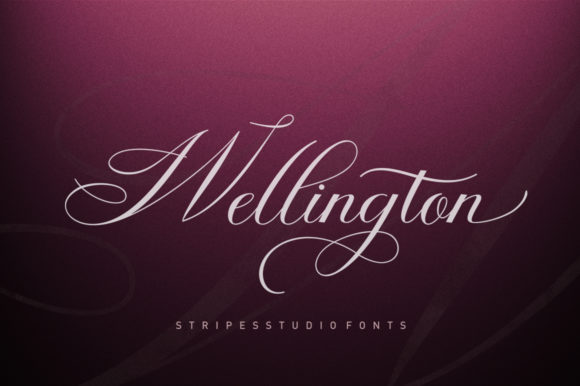
There’s something quietly exciting about opening a fresh brand board and dropping in Wellington Script for the first time. I was midway through developing a visual identity for a small-batch herbal tea shop—think hand-poured blends, linen packaging, and quiet neighborhood appeal—and needed a typeface that felt personal without sacrificing polish. That’s when I reached for Wellington Script. It landed like a breath of fresh air: fluid but controlled, expressive but legible, warm but unmistakably professional.
Wellington Script for Logo Design and Brand Identity Systems
As a Script Handwritten font, Wellington Script doesn’t try to mimic messy pen-on-paper chaos. Instead, it balances natural stroke variation with clean spacing and open counters—making it unusually strong for logo design. I tested it as the primary wordmark on three versions of the tea shop’s name: one stacked, one horizontal, and one integrated into a simple leaf icon. In every case, Wellington Script held up beautifully at both 24pt (for business cards) and 120pt (for a shop window decal). Its readability shines where many script fonts falter—no squinting, no second-guessing letterforms. Because it’s designed as a modern handwritten script, not a calligraphic revival or ornamental flourish, it avoids looking dated or overly formal. That makes Wellington Script ideal for brands that want approachability *and* authority—especially when used consistently across stationery, signage, and digital touchpoints.
Wellington Script for Packaging Design and Product Labels
Packaging is where Wellington Script really proves its versatility. I placed it on matte kraft tea tins, translucent vellum sleeves, and even curved ceramic jar labels—and each time, the rhythm of the letters guided the eye naturally from product name to origin story. As a Fonts option built for real-world application, Wellington Script includes subtle alternates and contextual ligatures that prevent awkward collisions between “f”, “t”, and “y” characters. That’s critical when setting short phrases like “Lavender + Chamomile” or “Small Batch • Hand Blended”. No manual kerning gymnastics required. And because it’s easy to use, I could confidently hand off the label files to a local printer without worrying about glyph substitution errors or missing OpenType features.
Wellington Script for Social Media Graphics and Website Headers
For Instagram posts and homepage hero sections, Wellington Script delivers instant warmth and intention. I paired it with a clean, neutral sans serif (a light weight of Inter, to be exact) for body copy—creating contrast without competition. The Script Handwritten quality gives headlines personality; the sans serif keeps information scannable. On mobile screens, Wellington Script remains highly legible at 36–48px—even over textured backgrounds or soft-focus photography. That’s rare for a script font. Most handwritten fonts blur or collapse at smaller sizes, but Wellington Script’s generous x-height and balanced stroke contrast keep it crisp. Bonus: it works flawlessly in Figma, Adobe Illustrator, and Canva—no rendering hiccups, no missing glyphs. If you’re building templates for clients or recurring social campaigns, this reliability saves hours.
Wellington Script for Wedding Invitations and Elegant Branding
While my current project was tea-focused, I’ve since used Wellington Script on two wedding stationery suites—and each time, clients remarked how “effortlessly elegant” it felt. Not fussy. Not stiff. Just graceful. That’s the magic of this Script Handwritten typeface: it carries sophistication without pretension. For invitation suites, I set names in Wellington Script and details (date, location, RSVP) in a delicate serif—creating hierarchy that feels intuitive, not imposed. The font’s natural flow mimics the rhythm of thoughtful handwriting, which resonates emotionally in high-touch contexts like weddings or artisanal branding. And because Wellington Script is optimized for readability, guests actually *read* the fine print—not just admire the flourishes.
Wellington Script for Business Cards and Printed Marketing Materials
Business cards are tiny, high-stakes real estate—and Wellington Script earns its place there. I printed a test run on 300gsm cotton stock, and the curves held their shape beautifully under blind debossing. No thin strokes disappeared; no joins looked strained. That speaks to smart vector construction—a hallmark of well-crafted Fonts. As a display font, Wellington Script excels in short-form applications: taglines, monograms, shop signs, and even embroidered patches. It’s not meant for long paragraphs (no script font is), but as an accent typeface? Absolutely. Use it for your brand name, your slogan, your “hand-poured since 2021” line—and pair it thoughtfully with a grounded sans serif or warm serif for supporting text. That combination builds trust while keeping things human.
Wellington Script for Editorial Design and Creative Studio Branding
Creative studios and independent designers often need a typeface that reflects craft without cliché. Wellington Script fits that niche perfectly: it’s a Script Handwritten font that feels intentional, not incidental. In editorial layouts—like a studio’s seasonal lookbook or client case study—I used Wellington Script for section headers and pull quotes. Its gentle slant and organic terminals added movement without overwhelming the grid. And because it’s easy to use, I didn’t need advanced typographic knowledge to get great results. Just select, scale, and go. For freelancers building their own brand assets—pitch decks, email headers, proposal covers—Wellington Script adds distinction fast, without requiring custom lettering.
How to Test Wellington Script Before Committing to a Full Brand System
Before locking in Wellington Script across an entire identity, I always run three quick tests: First, set your core brand phrase at 16pt, 32pt, and 96pt—then step back. Does it read clearly at all sizes? Second, print it on your intended material (kraft paper, glossy brochure stock, fabric label)—does ink spread or bleed? Third, export a PNG and view it on iPhone and desktop. Does it pixelate or soften unnaturally? With Wellington Script, all three passed. Its file package includes OTF and WOFF formats, full Latin character support, and commercial licensing—so whether you’re designing for Shopify, Squarespace, or print-only clients, you’re covered. No surprises. No last-minute swaps.